Showing posts with label Fashion. Show all posts

Tuesday, 30 June 2026

1 July: Estee Lauder

Cosmetics businesswoman Estée Lauder was born on this date in 1908. Here are some thing you might not know about her.

  1. She was born in Queens, New York and her parents gave her the name Josephine Esther Mentzer. Esther was to be her first name, after a much loved great aunt, but her parents decided at the last minute to name her Josephine with Esther as her middle name. It didn’t stick; she was soon nicknamed Esty and ‘Estée’ was a variation of that.

  2. Her father had a hardware store and the young Estée would often help out there. It was here she developed a taste and aptitude for business. Although she did harbour a dream of becoming an actress, with her "name in lights, Flowers and handsome men".

  3. Fashion and beauty were early interests, and when an uncle from Hungary came to stay, who happened to be a skin specialist, she started helping him out, and learned from him.

  4. In her early twenties, she met and married Joseph Lauter, who later changed his name to Lauder. They were married for nine years before Estée decided she’d married too young and wanted to experience all the aspects of life she had missed, and so they divorced. She soon realised she’d made a mistake and had given up the "sweetest husband in the world". They remarried three years after the divorce and stayed together until Joseph died in 1983.

  5. In 1946, Estée and Joseph Lauder founded ‘Estée Lauder cosmetics. Initially, they sold just four products. Estée strongly believed that the ideal beauty routine didn’t need to be complicated and involve more than a few key products. She believed 3 minutes morning and evening were enough to spend on beauty routines. “Never sell a customer what she doesn’t want or need,” she wrote. Hence their early range was limited, including Skin treatments, a rouge, and a makeup base. She would go to beauty salons and demonstrate her products to women as they sat under the hairdryer.

  6. There’s a story, which may or may not be true, that on one occasion Estée went to sell a perfume to a Department store, but they turned it down. She went out into the shop and smashed a bottle of that perfume on the floor. When customers started asking what that fragrance was, the store had to change their minds and place an order.

  7. In 1953, women generally didn’t buy perfume for themselves but rather had to wait for their husbands to buy it for them as a gift. Estée had the idea of combining a perfume with a bath oil, which women would buy for themselves. Hence they could also get as much perfume as they wanted whenever they liked.

  8. Her company’s innovations included the first night serum, as she understood that skin repairs itself mostly at night and the texture of a serum was the best to penetrate the skin and aid the process. She invented the “Gift with Purchase” concept, now a standard industry practice. She was also the first to produce a high-end fragrance for men, Aramis, in 1963.

  9. It was important to Estée to know her employees personally, even when the company grew into a large corporation. She made sure to meet all prospective employees in person. “I don’t look at their resumes…I look at them,” she said. “My decision is based on chemical reaction."

  10. She was the first woman to receive the Chevalier class of the Legion of Honour from the Consul General of France in 1978; and was the only woman on Time Magazine's 1998 list of the 20 most influential business geniuses of the 20th century.


I also write novels and short stories. If you like superheroes, psychic detectives and general weirdness you might enjoy them. 
Check out my works of fiction at https://juliehowlinauthor.wordpress.com/my-books/

Saturday, 27 June 2026

28 June: Earrings

Today is International Body Piercing Day, so here are some facts about the most common jewellery worn in piercings: earrings.

  1. The wearing of earrings goes back a long way. Earrings made of Gold, lapis lazuli, and carnelian were found in ancient sites in Lothal, India, and in a Sumerian Royal Cemetery at Ur from the Early Dynastic period. Gold, Silver and bronze hoop earrings were worn in the Minoan Civilization (2000–1600 BCE).

  2. They were often primarily worn by men rather than women. Friezes from the Persian Empire during the Achaemenid dynasty (550–330 BC), show warriors wearing earrings. Otzi the Iceman had pierced Ears and so did Tutenkhamen.

  3. Fashions changed over the ages. In the middle ages, women wore headdresses which covered the ears, so earrings went right out of fashion. By the 16th century, earrings were back with Pearl earrings being especially popular. They were worn by men during this era, too. Shakespeare, Sir Walter Raleigh and Francis Drake all wore gold earrings. The Victorians considered piercings vulgar and inappropriate, so they went out of fashion again in the late 19th and early 20th centuries. Earlobe stretching, common in indigenous cultures for thousands of years, began to appear in Western society in the 1990s.

  4. Some ancient peoples believed that evil spirits could get into a person’s body through its orifices, so some early earrings would have been amulets to keep demons out of a person’s ears.

  5. Ancient doctors believed that earrings cured headaches and improved eyesight.

  6. Sailors wore them almost like badges or medals. A sailor who’d crossed the equator, sailed all around the world, or survived a shipwreck would be entitled to an ear piercing. They’d often choose gold earrings as a kind of funeral plan – they could be used to pay for their burial when they died.

  7. In India, babies often have their ears pierced soon after birth. In the West, cheap ear piercings have been offered by jewellery stores aimed at young women. In Ancient Egypt, they were possibly only worn by children, which was evidenced by the fact that Tutankhamun’s mummy wasn’t wearing any despite having pierced ears, although there were some buried in the tomb. The burial mask's ears were perforated, but the holes were covered with golden discs.

  8. The term "ear piercing" usually refers to an earlobe piercing. Piercings elsewhere on the ear are often referred to as "cartilage piercings". These take longer to heal than the earlobe variety.

  9. 13 April is National Silly Earring Day.

  10. Finally, some earring related world records. The record for the largest collection of earrings is held by American Carol McFadden who started collecting them in 1952 and in 2006 had 37,706 different pairs. In 2020, Ramkumar Sarangapani of Dubai created the largest pair, which measure 200 cm (78.74 in) in height and were designed as a replica of the Dubai Frame. GRT Jewellers in India created the heaviest earrings ever, to mark their 60th anniversary. They weighed in at 3.527 kg (7 lbs 12 oz) and are made of 22K gold. They don’t hold the record for the most expensive pair of earrings, though. That award goes to the Apollo and Artemis Diamonds, which sold for over $57 million.


I also write novels and short stories. If you like superheroes, psychic detectives and general weirdness you might enjoy them. 
Check out my works of fiction at https://juliehowlinauthor.wordpress.com/my-books/

Thursday, 21 May 2026

22 May: Wigs

Today is National Wig-Out Day: 10 facts about wigs

  1. They’ve been around since ancient Egypt. Ancient Egyptian fashion was for people to shave their heads or have short, cropped Hair. They wore wigs to protect their bald heads from the Sun.

  2. The word wig is short for periwig, which came from the French word ‘perruque’. In the 18th and 19th centuries, wigmakers were called perruquiers.

  3. In the 16th century, wigs were more hygienic than real hair. Head lice were extremely common, and it was easier to de-louse a wig than real hair – you could take a wig off and boil it to get rid of the nits.

  4. Another nasty thing common around that time was syphilis. While today that disease is quickly got rid of with antibiotics, in those days people were forced to suffer the ultimate effects which as well as madness and nasty sores, included hair loss. Being bald became a source of shame so those affected took to wearing wigs. Samuel Pepys wrote when his brother contracted syphilis that if he survived, “he will not be able to show his head—which will be a very great shame to me.”

  5. Pepys wore wigs himself, but was rather ambiguous about it. He wrote about the day he had his head shaved and tried on his new periwig for the first time, mentioning concerns that his headwear might have been made from the hair of someone who’d died of the plague.

  6. Wigs were very fashionable with royalty. Queen Elizabeth I owned 150 individual hair pieces. Louis XIV started to go bald at 17 and hired 48 wig makers to save his image. Charles II of England, his cousin, had a similar problem and wore elaborate long wigs. Their courtiers copied them and hence wigs became everyday wear at court. Needless to say, these fashion accessories became very expensive. Even the most basic wig would cost a week’s salary for an ordinary man in the street. This is where the word “bigwig” comes from, a bigwig being a person who could afford a larger, more elaborate wig.

  7. It takes six heads of hair to make a full human hair wig.

  8. The most expensive wig ever sold at an auction was one that had belonged to Andy Warhol. It sold for $10,800.

  9. Wigs, of course, are often used by actors as part of their costumes. Film studios are among a modern wig maker’s best customers. The second Lord of the Rings film, The Two Towers holds the record for the highest number of wigs used in one film.

  10. Ironically, today, especially at Halloween, people with hair wear "rubber wigs" to make them look bald!


Thursday, 2 October 2025

3 October: Bloomingdales

On this date in 1872 Bloomingdale's Department store in New York opened. 10 facts about Bloomingdale’s:

  1. Bloomingdale’s was founded by brothers Joseph and Lyman Bloomingdale.

  2. The first shop the family opened was a few years earlier in 1861. This shop was the Ladies' Notions Shop in New York's Lower East Side, which sold European fashions, in particular, hoop skirts.

  3. The shop they opened on this date in 1872 was called Bloomingdale's Great East Side Bazaar and it was located at 965 Third Avenue, between 56th & 57th Streets. At the time, this wasn’t part of New York’s main shopping district and was a working class area, so it was a bit of a risk. The first day’s takings were $3.68.

  4. It paid off, though and soon the Bazaar expanded into three nearby buildings and in due course moved into a building at 59th St. and Third Avenue, which is the flagship store to this day.

  5. It was different from most boutiques at the time, because it didn’t specialise in just one type of clothing as the others did, but sold everything under one roof. Bloomingdale’s was a pioneer in window displays which attracted the attention of passers by. It was also the first store in New York to install Escalators. This attracted customers who came to gawp at this new-fangled way of getting to the upper floors, and who hopefully bought stuff while they were there.

  6. One of its most famous customers was Queen Elizabeth II, who spent an afternoon there with Prince Philip in 1976.

  7. There are two time capsules in the cornerstones which are due to be opened in 2130. They are said to contain an autographed baseball from Babe Ruth, and three bank books in which $25 had been deposited, which could be worth millions by now.

  8. From 1979, there was a restaurant within the store called Le Train Bleu, which was modelled on the dining car of a French luxury train. It is now closed, as is the sky bridge between 59th and 60th street, one of the last remaining examples of this type of Bridge in Manhattan.

  9. In 1984, Bloomingdale’s sold bags of ice chips from a 100,000 year old glacier in Greenland. “Glazonice” would set you back $7 a bag. The ice was marketed as the oldest and purest you could find anywhere on Earth. It was also said that because of the denseness, it would not dilute your cocktail.

  10. Each morning, New York New York by Frank Sinatra plays as the doors open. This is the only music the store ever plays.


Beta

(Combat Team Series #2)


Steff was abducted by an evil alien race, the Orbs, at fourteen. Used as a weapon for years, he eventually escapes, but his problems are just beginning. How does a man support himself when his only work experience is a paper round and using an Orb bio-integrated gun?

Warlord is an alien soldier who knows little but war. When the centuries-old conflict which ravaged his planet ends, he seeks out another world where his skills are still relevant. There are always wars on Earth, it seems. However, none of Earth's powerful armies want him.

Natalie has always wanted to visit England and sees a chance to do so while using her martial arts skills, but there are sacrifices she must make in order to fulfil her dream. 

Maggie resorted to crime to fund her sister's medical care. She uses her genetic variant abilities to gain access to the rooms of wealthy hotel guests. The Ballards look like rich pickings, but they are not what they seem. When Maggie targets them, little does she know that she is walking into a trap.

Hotel owner Hamilton Lonsdale puts together a combat team to pit against those of other multi-millionaires. He recruits Warlord, Natalie, Maggie and Steff along with a trained gorilla, a probability-altering alien, a stockbroker whose work of art proved to be much more than he'd bargained for, a marketing officer who can create psionic forcefields, a teleporting member of the landed gentry, and a socially awkward fixer. This is Combat Team Beta.

Steff never talks about his time with the Orbs, until he finds a woman who lived through it, too. Steff believes he has finally found happiness, but it is destined to be short-lived. He is left with an unusual legacy which he and Team Beta struggle to comprehend; including why something out there seems determined to destroy it.


Paperback


Wednesday, 12 March 2025

13 March: Earmuffs Day

Today is Earmuffs Day, commemorating Chester Greenwood, from Farmington, Maine, who patented them on this date in 1877.

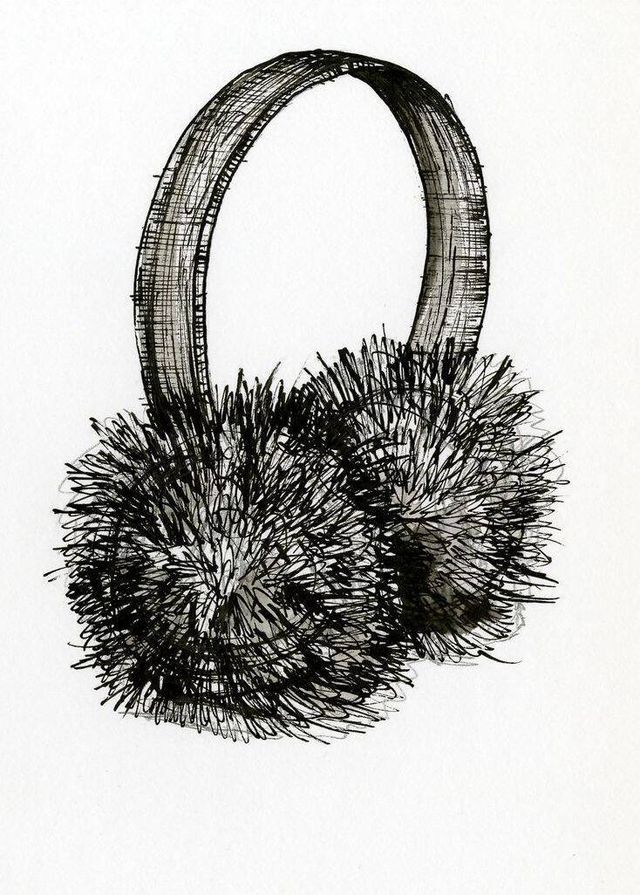
  1. Earmuffs can be defined as a piece of equipment or clothing accessory that covers the Ears. They are used for either thermal (keeping the ears warm) or acoustic (protection from loud noise) purposes.

  2. Thermal earmuffs came first. The above mentioned Chester Greenwood was out Ice skating at the age of 15 when he came up with an idea to keep his ears warm.

  3. He went home and asked his grandmother to sew pieces of Beaver fur between two loops of wire.

  4. Greenwood made further improvements to his design – he added a steel band to connect the loops to hold them in place. He also covered the inside of the mufflers with black velvet for comfort.

  5. He was just 18 when granted the patent. However, while he is generally credited with the invention of earmuffs, he wasn’t the first to come up with the idea. The reason he got a patent was the improvements he made, in particular a v-shaved swivel hinge that kept earmuffs tight to the ear.

  6. Earmuffs became Greenwood’s career. He opened a factory in Farmington which by 1883 was making 50,000 pairs a year and continued making them for 60 years. Farmington calls itself the Earmuff Capital of the World and has an annual celebration, Chester Greenwood Day on December 21, and a parade on the first Saturday in December.

  7. ‘Earmuffs’ as one word was first used in 1889.

  8. Why wear earmuffs and not a woolly hat, you may be asking? The ears stick out from the side of the head in order to fulfil their function of gathering sound waves. They have a high skin surface-area-to-volume ratio, and very little muscle tissue. When a person is involved in strenuous activity wind chill factor can make the ears cold but the rest of the body may be warm. Wearing a hat in these circumstances could result in a person becoming too hot.

  9. Acoustic earmuffs are believed to have originated during World War II. Pilots of military aircraft wore leather flaps over their ears to protect against hearing loss due to engine noise.

  10. Farmers put earmuffs on calves during the winter to protect them from the harsh cold and prevent frostbite. There are pictures on Instagram!


Beta

(Combat Team Series #2)


Steff was abducted by an evil alien race, the Orbs, at fourteen. Used as a weapon for years, he eventually escapes, but his problems are just beginning. How does a man support himself when his only work experience is a paper round and using an Orb bio-integrated gun?

Warlord is an alien soldier who knows little but war. When the centuries-old conflict which ravaged his planet ends, he seeks out another world where his skills are still relevant. There are always wars on Earth, it seems. However, none of Earth's powerful armies want him.

Natalie has always wanted to visit England and sees a chance to do so while using her martial arts skills, but there are sacrifices she must make in order to fulfil her dream. 

Maggie resorted to crime to fund her sister's medical care. She uses her genetic variant abilities to gain access to the rooms of wealthy hotel guests. The Ballards look like rich pickings, but they are not what they seem. When Maggie targets them, little does she know that she is walking into a trap.

Hotel owner Hamilton Lonsdale puts together a combat team to pit against those of other multi-millionaires. He recruits Warlord, Natalie, Maggie and Steff along with a trained gorilla, a probability-altering alien, a stockbroker whose work of art proved to be much more than he'd bargained for, a marketing officer who can create psionic forcefields, a teleporting member of the landed gentry, and a socially awkward fixer. This is Combat Team Beta.

Steff never talks about his time with the Orbs, until he finds a woman who lived through it, too. Steff believes he has finally found happiness, but it is destined to be short-lived. He is left with an unusual legacy which he and Team Beta struggle to comprehend; including why something out there seems determined to destroy it.


Paperback

Monday, 9 December 2024

10 December: Sarongs

Today is National Sarong Day. 10 things you might not know about the garment.

  1. A sarong is a large tube or length of fabric, often wrapped around the waist.

  2. The word comes from the Malay language and means 'to cover' or 'to sheath'. It was first used in 1834 referring to the skirt-like garment of the Malays.

  3. There’s a similar word in the African Akan language, which means "the highest point", because the garment is fastened at the very top in order to secure it.

  4. The sarong may go under different names depending where in the world you are. In southern India, sarongs are better known as mundus. These tend to be less colourful than those from Southeast Asia and worn for religious and ceremonial purposes. In East Africa, sarongs worn by men are referred to as kangas. The sarongs worn by the women are known as kikois.

  5. Malay men wear sarongs with a checked pattern only when attending Friday prayers at the mosque. The songket—a type of sarong embroidered with gold and silver thread—is reserved for special ceremonies such as weddings.

  6. In East Sumba, Indonesia, only royalty were allowed to wear bright-coloured and intricate fabrics. Ordinary people were restricted to one or two colours and plain patterns.

  7. In colonial times there were strict rules about who could wear them. Local people were ordered to wear them in the Dutch East Indies, while the lady colonists were banned from wearing them, at least in public, because it implied that they had “gone native”. Hence sarongs were a tool to reinforce the social hierarchy. Some Dutch women still wore them at home due for ease of movement and suitability to the tropical climate. They made their own, using European designs and fabrics, which became so desirable as exotic goods that they were even exported and sold back at home.

  8. Christian moralists would claim the garment was too revealing and the fabric too thin, and was essentially a petticoat, and had to be worn with a long skirt.

  9. In India and Burma, it is actually possible to hold back forces of soldiers or police with a washing line of sarongs. Men there believe that passing under such a line would emasculate them and make them more feminine, so such forces could be stopped just by hanging sarongs on a line across a road.

  10. In western society today, a sarong is typically worn over swimwear in hot or humid locations.


A Very Variant Christmas

Last year, Jade and Gloria were embroiled in a bitter conflict to win back their throne and their ancestral home. This year, Queen Jade and Princess Gloria want to host the biggest and best Christmas party ever in their palace. They invite all their friends to come and bring guests. Not even the birth of Jade's heir just before Christmas will stop them.

The guest list includes most of Britain's complement of super-powered crime-fighters, their families and friends. What could possibly go wrong?

Gatecrashers, unexpected arrivals, exploding Christmas crackers and a kidnapping, for starters.

Far away in space, the Constellations, a cosmic peacekeeping force, have suffered a tragic loss. They need to recruit a new member to replace their dead colleague. The two top candidates are both at Jade and Gloria's party. The arrival of the recruitment delegation on Christmas Eve is a surprise for everyone; but their visit means one guest now faces a life-changing decision.

Meanwhile, an alliance of the enemies of various guests at the party has infiltrated the palace; they hide in the dungeon, plotting how best to get rid of the crime-fighters and the royal family once and for all. Problem is, they all have their own agendas and differences of opinion on how to achieve their aims.

Not to mention that this year, the ghosts who walk the corridors of the palace on Christmas Eve will be as surprised by the living as the living are by them.

Themes 
Christmas; superheroes; reunions; parties; life choices; shocking surprises; mistaken identity; kidnap and rescue.

Reasons not to read it

  • It's a bit short. You could probably read it in one sitting.
  • Most of the action takes place at a Christmas party. In a palace.
  • It's all about Christmas but there doesn't seem to be a schmaltzy moral message.
  • There are a couple of babies and some small children in it - and one nearly gets eaten.
  • Santa appears in it, but he isn't really Santa.
  • Superheroes. Again.
  • Not to mention a whole bunch of super-villains. Again all new ones and not the ones we know from Marvel or DC.

Available from Amazon and Amazon Kindle


Sunday, 1 December 2024

2 December: Shirts

On this date in 1996 China announced that over production of shirts had led to a shirt mountain – three shirts for every citizen of China.

10 facts about shirts:

  1. A shirt is defined as a cloth garment for the upper body (from the neck to the waist).

  2. The oldest shirt ever found was discovered by Flinders Petrie, a linen shirt from a First Dynasty Egyptian tomb at Tarkan, dated to c. 3000 BC.

  3. Before the 20th century, shirts were men’s underwear. The long tails of shirts served the purpose of underpants. As late as 1879, a visible shirt with nothing over it was considered improper.

  4. Eighteenth-century costume historian Joseph Strutt believed that men who did not wear shirts to Bed were indecent.

  5. The earliest European garment in the Victoria and Albert Museum is a man's shirt, dated 1540.

  6. Coloured shirts weren’t a thing until the 19th century, and were first seen in the paintings of George Caleb Bingham. At that time, coloured shirts were strictly for the lower classes only. It wasn’t until the 1920s that a Blue shirt became standard wear for a gentleman.

  7. Detachable collars were invented by a housewife who was sick of doing laundry. Hannah Montague was a housewife in New York who didn’t see why she should wash an entire shirt when only the collar was really dirty. So in 1827, she began cutting the collars off and washing them separately and then re-attaching them.

  8. The expression "To give the shirt off one's back", indicates extreme desperation or generosity and was first recorded in 1771.

  9. In the 1920s and 1930s, fascists wore coloured shirts, varying according to the country they came from. Black shirts were worn by Italian fascists, Brown shirts were worn by German Nazis; The Blueshirts was a fascist movement in Ireland and Canada, Green shirts were used in Hungary, Ireland, Romania, Brazil and Portugal. Golden shirts were used in Mexico. Red shirts were worn by the racist and antisemitic Bulgarian Ratniks. Silver Shirts were worn in the United States of America; and Grey shirts were worn by members of the Fatherland League in Norway.

  10. In Spain in the 19th century, the word descamisados ("shirtless") meant the masses of the poor.


Latest

Beta

(Combat Team Series #2)


Steff was abducted by an evil alien race, the Orbs, at fourteen. Used as a weapon for years, he eventually escapes, but his problems are just beginning. How does a man support himself when his only work experience is a paper round and using an Orb bio-integrated gun?

Warlord is an alien soldier who knows little but war. When the centuries-old conflict which ravaged his planet ends, he seeks out another world where his skills are still relevant. There are always wars on Earth, it seems. However, none of Earth's powerful armies want him.

Natalie has always wanted to visit England and sees a chance to do so while using her martial arts skills, but there are sacrifices she must make in order to fulfil her dream. 

Maggie resorted to crime to fund her sister's medical care. She uses her genetic variant abilities to gain access to the rooms of wealthy hotel guests. The Ballards look like rich pickings, but they are not what they seem. When Maggie targets them, little does she know that she is walking into a trap.

Hotel owner Hamilton Lonsdale puts together a combat team to pit against those of other multi-millionaires. He recruits Warlord, Natalie, Maggie and Steff along with a trained gorilla, a probability-altering alien, a stockbroker whose work of art proved to be much more than he'd bargained for, a marketing officer who can create psionic forcefields, a teleporting member of the landed gentry, and a socially awkward fixer. This is Combat Team Beta.

Steff never talks about his time with the Orbs, until he finds a woman who lived through it, too. Steff believes he has finally found happiness, but it is destined to be short-lived. He is left with an unusual legacy which he and Team Beta struggle to comprehend; including why something out there seems determined to destroy it.


Paperback

Friday, 31 May 2024

1 June: National Nail Polish Day

Today is National nail Polish day. Here are 10 things you might not know about nail varnish:

  1. Nail polish first appeared in ancient China and Egypt. It was often a mixture of egg whites, gelatin, beeswax, and vegetable dyes, such as henna.

  2. It was a way of indicating social class. Only the nobility were allowed to wear Red. Lower classes could only wear nude or pale colours.

  3. Nail polish as we know it today was inspired by the enamel used on cars. In the 1920s, makeup artist Michelle Menard adapted the enamel used for cars to create a polish for nails.

  4. There is archaeological that the Ancient Babylonians painted their nails with solid Gold before they went into battle.

  5. In the Victorian era, it was generally considered improper for women to wear nail polish, or, indeed, make up.

  6. In the 1950s, women were often required to remove their nail polish on Sundays before going to church, because of the association with promiscuity that existed then.

  7. Rita Hayworth is thought to have popularised red nails when she wore nail polish in early coloured films.

  8. Opened bottles of nail polish only last about two years. Nail varnish remover, however, never expires and lasts forever.

  9. The most expensive nail polish costs $250,000. The shade Black Diamond King is made with 267 carats worth of black Diamonds.

  10. Some nail polishes include ingredients best known as food. Kale allegedly smooths and brightens nails; Garlic strengthens and hardens them and Cucumber prevents splitting.


New!!!

The first in a new series! It has invading aliens, gladiator-style contests, rivalry and romance.

The six richest people in Britain decide to hold a contest to settle the question of which of them is most successful. It will be a gladiator style contest with each entrant fielding a team of ten super-powered combatants. Entrepreneur Llew Powell sets out to put together his team, which includes his former lover, an employee of his company with a fascinating hobby, two refugees from another dimension (a lonely giant and a drunken sailor), two sisters bound together by a promise, a diminutive doctor, a former Tibetan monk initiate and two androids with a history. As the team train together, alliances form, friendships and more develop, while others find the past is not easy to leave behind.

Meanwhile, a ruthless race of aliens has its eyes on the Earth. Already abducting and enslaving humans, they work towards the final invasion which would destroy life on Earth as we know it. Powell’s group, Combat Team Alpha, stumble upon one of the wormholes the aliens use to travel to Earth and witness for themselves the horrors in store if the aliens aren’t stopped. Barely escaping with their lives, they realise there are more important things to worry about than a fighting competition.


Monday, 15 April 2024

16 April: Pyjamas

It’s Wear your Pyjamas To Work Day! Here are 10 things you might not know about pyjamas:

  1. Wear your pyjamas to work day was created in 2004 by PajamaGram to reward those working late on taxes. It’s purely and simply a bit of fun. However, before you head off to the office in your jammies it’s worth checking with HR that it’s allowed. If you work for local government in the United Arab Emirates it definitely isn’t. There has been a strict dress code in effect since 1976 and pyjamas in the office are forbidden.

  2. Okay, so you checked with your boss and have been told it’s fine to celebrate Wear Your Pyjamas to Work Day. But what about getting there? Is driving in pyjamas against the law? In the UK, there’s no specific law against driving in pyjamas. That said, rule 97 of the Highway Code states that drivers must wear appropriate clothing and footwear that doesn't prevent them from using the controls correctly. If your pyjamas and slippers do that, you could end up with a fine.

  3. Oh, and is it “pyjamas” or “pajamas”? Depends where you come from. It’s “pajamas” in America and “pyjamas” in the UK and Australia.

  4. However you spell it, the word derives from and Indian word for “leg garment”. The original pyjamas were loose, lightweight trousers fitted with drawstring waistbands worn by people in India. The style was later adopted by Europeans during the British East India Company's rule in India.

  5. Pyjamas with feet in are mainly for kids these days, but they started out as adult night attire. People started sewing Socks to their pyjama legs, not only to keep their feet warm, but to keep the bed bugs from biting. A tailor in Jermyn Street, when asked about the reason, replied. "I believe, Sir, it is because of the White Ants."

  6. Another feature of kids’ pyjamas, and even adult ones, sometimes, is drop seat (also known as a trap door or butt flap), designed to make it easier to use the Toilet during the night.

  7. In the Middle Ages, only the rich wore them. Ordinary people wore shapeless smocks to bed. It was the Victorians who popularised pyjamas for men around the 1870s. Pyjamas for women became popular in the 1920s thanks to Coco Chanel’s designs for lounging wear.

  8. In the 17th century, pyjamas were known as “mogul's breeches”. Today they might be referred to as PJs jammies or jim-jams, although in Africa and South Asia people call their PJs “night suits”.

  9. In the early 1900s, a fashion designer named Paul Poiret created silk pyjamas which could be worn out and about during the day. In the 1920s it was considered highly fashionable to wear pyjamas to the beach. In Japan, wearing them to go out during the day is perfectly acceptable, especially a Kigurumi, which is a word for pyjamas made to look like a giant stuffed animal.

  10. The World’s Largest Footed Pyjama Party was held in Austin, Texas on March 11, 2012. 309 adults dressed in footed pyjamas to set a Guinness World Record.


New!!!
The first in a new series! It has invading aliens, gladiator-style contests, rivalry and romance.

The six richest people in Britain decide to hold a contest to settle the question of which of them is most successful. It will be a gladiator style contest with each entrant fielding a team of ten super-powered combatants. Entrepreneur Llew Powell sets out to put together his team, which includes his former lover, an employee of his company with a fascinating hobby, two refugees from another dimension (a lonely giant and a drunken sailor), two sisters bound together by a promise, a diminutive doctor, a former Tibetan monk initiate and two androids with a history. As the team train together, alliances form, friendships and more develop, while others find the past is not easy to leave behind.

Meanwhile, a ruthless race of aliens has its eyes on the Earth. Already abducting and enslaving humans, they work towards the final invasion which would destroy life on Earth as we know it. Powell’s group, Combat Team Alpha, stumble upon one of the wormholes the aliens use to travel to Earth and witness for themselves the horrors in store if the aliens aren’t stopped. Barely escaping with their lives, they realise there are more important things to worry about than a fighting competition.


Friday, 12 April 2024

13 April: Corsets

Born on this date in 1519 was Catherine de Medici, the wife of French king Henry II. She is credited with inventing the corset, because she banned women with thick waists from her court. 10 things you might not know about corsets:

  1. Actually, Catherine can’t have invented corsets, because women in ancient Greece wore them. Researchers have found evidence that corsets existed in the Minoan civilization of early Crete. The oldest depiction of one is on a figurine of the Minoan Snake goddess, and linen and wool corsets were also found in the tombs of human women in Crete.

  2. The word corset derives from the Old French word “cors” meaning body. The literal translation is “little body”.

  3. The craft of corset construction is known as corsetry.

  4. In earlier times, they were known by other names. Similar garments in the late 16th century were called "a pair of bodys", and in the 17th and 18th century they were known as “stays”.

  5. The most common use of corsets is to slim the body and make it conform to a fashionable silhouette. Hence a corset worn in Elizabethan times would be different to the ones worn by Victorian women, because fashions change. Victorian women didn’t necessarily want to make their waists smaller, just to make them look smaller compared to their hips. Padding around the hips was common as well.

  6. Corsets were never worn directly next to the skin, but over a loose garment known as a shift or chemise. This was not only for comfort, but because corsets weren’t easily washable.

  7. Small children would often be dressed in corsets, but this was to do with helping their bones grow properly rather than fashion. People believed that corsets prevented rickets. Another health myth the Victorians bought into was that it was very bad for you to have cold Kidneys, and a corset would keep your kidneys warm.

  8. Warm kidneys aside, wearing tightly laced corsets was actually not good for you. They decreased lung capacity which made exercising harder. A corseted woman might get out of breath when doing even moderate exercise like dancing. Doctors of the time discouraged women from exercising for this reason. Corsets were widely thought to contribute to tuberculosis. They’d also constrict the stomach and digestive organs and cause problems in that area, too.

  9. Napoleon Bonaparte hated corsets and actively campaigned to get rid of them. Not because he believed women should be comfortable and able to move, but because he thought they caused infertility and were therefore responsible for the decline of the human race.

  10. As world wars led to women taking on men’s jobs, corsets fell out of fashion entirely. They are no longer everyday wear, although they might be worn as a fashion statement.

Wednesday, 20 March 2024

21 March: Chanel No 5

As today is Fragrance Day, here are 10 facts about Chanel No 5, the first perfume launched by French couturier Gabrielle "Coco" Chanel in 1921.

  1. Before Chanel No 5, Perfumes fell into two categories. Floral scents for fine ladies and musky scents for ladies of the night. Coco Chanel decided the market needed a new kind of fragrance for the modern woman of the time.

  2. She asked French-Russian chemist and perfumer Ernest Beaux to come up with some samples. The story goes that she picked the fifth sample he presented to her and that’s how the name No. 5 came about.

  3. Although possibly she’d have picked the fifth one even if it smelled disgusting, because Coco Chanel was especially fond of the number 5 anyway. She spent six years in a convent orphanage from the age of twelve, and the number five had a special significance there. The number five was the number of quintessence: the symphony of earth, water, wind, fire, and spirit; the pure embodiment of a thing, its spirit and meaning. The paths leading to the cathedral featured patterns relating to the number. Chanel would launch her new products on the fifth of May because she believed it was an auspicious date.

  4. Chanel No 5 has over 80 ingredients including May rose, Jasmine, ylang-ylang and neroli from the town of Grasse in France, sandalwood and Vanilla. The formula has changed little since 1921, except for changes to certain animal based products in line with current fragrance industry requirements. It takes one tonne of flowers to create 1.5 kilograms of its “absolute”, the concentrated oil used in perfumery.

  5. During the second world war, the resistance used modified Chanel No 5 bottles to carry secret messages, literally under the noses of the German occupiers. They didn’t suspect a well dressed woman carrying a luxury accessory. At the end of the war, American soldiers queued in Paris to buy bottles of it to take home for their wives and girlfriends.

  6. The simple design of the bottle contrasted with other brands at the time, which went for romantic and complicated designs. Chanel based it on her lover’s Whiskey decanters. There was also a design feature only obvious when looking at the bottle from above. It’s the same shape as Paris’s Place Vendôme.

  7. Coco Chanel herself was the first face of the brand in 1937. Since then a number of famous faces have appeared in the advertisements, including Ali MacGraw, Jean Shrimpton, Catherine Deneuve, Nicole Kidman (who starred in the most expensive TV advertisement of the time, directed by Baz Luhrmann, which cost US$33 million to produce), and Brad Pitt (the first man to appear in an advert for women's perfume). The face of Chanel No 5 at time of writing is Marion Cotillard.

  8. A bottle of Chanel No. 5 perfume is sold worldwide every 30 seconds.

  9. In April 1952, Marilyn Monroe was asked what she wore in bed, to which she replied, “I only wear Chanel No. 5.”

  10. The most expensive bottle of the stuff was a 30.4-ounce Chanel No. 5 Limited Edition Grand Extrait in red, handcrafted from Baccarat crystal in 2018. Only 55 bottles were ever made and it would set you back $30,000.