On the 22nd day of the month, here are ten facts about the number 22:

- 22
is the atomic number of titanium.
- Catch-22
is a satirical war novel by American author Joseph Heller, published
in 1961. In the book, Catch-22 is a military rule which states that
insanity is a valid reason not to fly missions. However, It could be
argued that a person would have to be insane to fly. The title gave
its name to a common expression meaning a no-win situation.
- There
are 22 letters in the Hebrew Alphabet and 22 paths in the
Kabbalistic Tree of Life.
- There
are 22 stars in the Paramount Pictures logo.
- At
the start of a game of snooker there are 22 balls on the table.
- There
are 22 boxes to choose from on the game show Deal or No Deal.
- The
A22 road in the UK runs from London to Eastbourne in East Sussex.
- There
are 22 yards in a chain.
- There
are a number of songs with 22 in the title. Lily Allen and Taylor
Swift both recorded songs called 22. 22 Acacia Avenue is a
song by Iron Maiden; 22 Dreams is a song and album by Paul Weller.
22 Twos is a song by Jay-Z in which he rhymes the words two, to and
too 22 times.
- In
numerology, the number 22 is sometimes referred to as “The Master
Builder” and is said to be the most powerful number, because it
represents the ability to turn dreams into reality. People with 22
in their numerology chart are diplomatic, confident, practical and
get things done. They have great potential for success and make
great leaders. They must, however, beware of putting too much
pressure on themselves or letting great opportunities pass by.
Balance and harmony is also a feature of this number, so people
influenced by it dislike disagreements and arguments.
MY LATEST BOOK!
Killing Me Softly
Sebastian Garrett is an assassin. It wasn’t his first choice of vocation, but nonetheless, he’s good at it, and can be relied upon to get the job done. He’s on top of his game.
Until he is contracted to kill Princess Helena of Galorvia. She is not just any princess. Sebastian doesn’t bargain on his intended victim being a super-heroine who gives as good as she gets. Only his own genetic variant power saves him from becoming the victim, instead of Helena.
Fate has another surprise in store. Sebastian was not expecting to fall in love with her.
Available on Amazon:
On this date in 1884, the first Test Cricket match played at Lord's. Here are 10 things you might not know about cricket. It’s the second most popular sport on the planet (the first being Football).
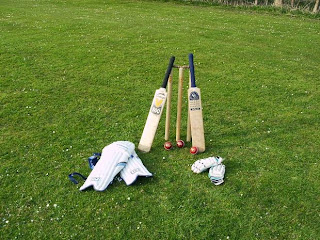
- It’s
thought to have originated as a children’s game, and one that was
often played by shepherds in England to pass the time while minding
the sheep. They’d use a lump of wool as the ball. The word
“wicket” comes from a wicket gate, through which sheep were
herded.
- The
name of the game itself is thought to come from either the Old
English word "cryce" or the Middle Dutch word "krick".
Both words have similar meanings – a crook, a staff, or a stick.
- The
first recorded mention of a game of cricket was in 1611, in the
ecclesiastical court records at Sidlesham in Sussex. Two men,
Bartholomew Wyatt and Richard Latter, failed to attend church on Easter Sunday because they were playing cricket. They were fined 12d
each and ordered to do penance.
- A
cricket bat is made up of three parts: the grip, the handle and the
blade, the part used to strike the ball. The blade must not be more
than four and one quarter inches (108 mm) wide and the bat must be
no longer than 38 inches (96.5 cm) long.
There’s no standard weight but they usually weigh 2-3lbs. New
cricket bats are rubbed with linseed oil to make the bat shrink,
resulting in a tougher hitting surface.
- The
ball is made from layered cork which is wrapped in string and
covered with leather. The standard size is a circumference of 9
inches (22.9cm) weighing five and a half ounces. Being hit
repeatedly by a cricket bat does the ball no good – it will
eventually deteriorate to the point where it’s no longer usable. A
new ball has a prominent seam which means its behaviour in flight
can be manipulated by the bowler. How a ball behaves in flight
changes as it deteriorates. Players can manipulate the behaviour of
a ball by polishing it or spitting on it on one side. Illegal ball
tampering, often mentioned in the news, is when a player has
scratched the ball, picked at the seam or rubbed substances other
then their own spit on it.
- The
longest cricket match in history was played in 1939 between South Africa and England. The game lasted for two weeks and even then,
there was no clear winner. The only reason the game did not go on
even longer was that the England team had to catch a ship home, so
the result was declared to be a draw.
- Cricket
spread all over the world as a result of the growth of the British
Empire. Hence it’s popular in India, Australia, the West Indies
and South Africa today. It was once popular in the USA as well - it
was a popular sport there between 1834 and 1914 with over 1000
cricket clubs across 46 states. The first international cricket
match was in fact between the USA and Canada in 1844. Between 10,000
and 20,000 spectators attended the match and it’s said over
$120,000 in bets were placed on the game, which Canada won.
- Cricket
is known for it’s complicated rules, virtually incomprehensible to
people who aren’t players or fans. Basically, thirteen players and
two umpires are on the field during normal play. All eleven members
of the fielding team are there, including a bowler and a wicket
keeper. Two of the other team are batting. Batsmen remain until they
are out (their innings). The ball is bowled six times from each end
of the pitch – six balls is called an over, because the umpire
keeps count and calls “Over!” after the sixth one.
- Traditionally,
a match would continue until all the batsmen were out, although in
recent years there has developed a form of the game where a limited
number of overs is played, usually 20, hence it’s called Twenty20.
A twenty20 game can be played in three or four hours and hence has
broadened the appeal of cricket to a wider audience. At the other
end of the scale, a test match takes place over several days. The
term test match comes from the idea that to play any sport for that
long was somewhat testing.
- The
complete rules of the game were written into the Laws of Cricket in
1744. These rules apply worldwide and are usually referred to as
“the Laws” (capital L). There are 42 of them. The preamble to
the laws includes the statement that the game should not only be
played according to these 42 rules but “also within the Spirit of
Cricket" – in other words, they are to act like gentlemen. The captain of a cricket team’s responsibilities traditionally include making sure his team conduct themselves "within the spirit and traditions of the game as well as within the Laws". Hence we get the English phrase “It’s not cricket” meaning something is unfair. Other cricket terms which have found their way into everyday expressions include “he had a good innings” – meaning he lived a long life, and being “on a sticky wicket”, meaning in a difficult situation.
See
also: Quotes about cricket.
MY LATEST BOOK!
Killing Me Softly
Sebastian Garrett is an assassin. It wasn’t his first choice of vocation, but nonetheless, he’s good at it, and can be relied upon to get the job done. He’s on top of his game.
Until he is contracted to kill Princess Helena of Galorvia. She is not just any princess. Sebastian doesn’t bargain on his intended victim being a super-heroine who gives as good as she gets. Only his own genetic variant power saves him from becoming the victim, instead of Helena.
Fate has another surprise in store. Sebastian was not expecting to fall in love with her.
Available on Amazon:
This day in 1766 saw the birth of Thomas Bruce 7th Earl of Elgin, the one who brought the Elgin Marbles to Britain. 10 things you might not know about the Elgin Marbles.

- They
were originally sculpted for the Parthenon, a temple in ancient Greece, built for the Goddess Athena 2,500 years ago. The building
changed purpose a few times – it became a Christian church, then a
mosque. All the changes took their toll on the statues within. At
one point, in 1687, the building was used as a gunpowder store and a
huge explosion blew the roof off and damaged the sculptures even
more.
- By
the 19th century, about half the sculptures had been
destroyed completely. Since the building that housed them was a
ruin, archaeologists were generally agreed it was never going to be
possible to restore them in their original places.
- This
is where Lord Elgin comes in. He was the British Ambassador to the
Ottoman Empire, and with the Empire’s agreement, he removed what
was left of the sculptures from the Parthenon, to preserve them, and
brought them to Britain, where, initially, he displayed them in a
temporary museum.
- In
1817, the Marbles went on display in the British Museum, where they
have been ever since.
- Not
all the surviving sculptures ended up in London, however. The Musée
du Louvre in Paris, Vatican Museums, the National Museum in
Copenhagen, the Kunsthistorisches Museum in Vienna, the University
Museum in Würzburg, and the Glyptothek in Munich have some of the
pieces as well. Some are still in Greece, in the Acropolis Museum in
Athens.
- So
what do the Elgin Marbles actually consist of? 21 statues, 15 panels
from metopes (a type of wall panel - there were originally 92 of
these) and 75 metres of a frieze which was originally 160 metres
long.
- The
artist in charge of creating the decoration for the Parthenon was
called Phidas. His
most famous work was the statue of Zeus at Olympia, one of the Seven
Wonders of the Ancient World. Phidas wouldn’t have carved all of
them, but rather supervised others to do most of the work.
- What
do they depict? Many are tales of war, from soldiers getting ready
for battle to the celebrations of victory afterwards. There would
certainly have been tales from Greek mythology, but
many of these were probably destroyed by the early Christians when
they turned it into a church.
- The
marble they were made from was transported 19km from a quarry at
Mount Pentelicus. While what we see in the British Museum are White statues, they would have been painted and embellished with metal
detail. Traces of paint have been found on some, telling
archaeologists that the background was painted Blue, but nothing
else is known about the colouring.
- Controversy
rages as to whether the Elgin Marbles should be returned to Greece.
Lord Elgin claimed
he had permission from the Ottoman authorities to take them, but it
has been suggested he bribed the Sultan in order to get his hands on
them, and it was more plunder then preservation. There have been
many calls to return the marbles to Greece, because that is where
they belong, and Britain argues that moving them could end up
destroying them completely, not to mention setting a precedent which
would see UK museums emptied of most of their ancient art as
countries of origin would demand things back.
About 40%
of British people think the Elgin Marbles should be returned to
Greece, as
do UNESCO and George Clooney.
MY LATEST BOOK!
Killing Me Softly
Sebastian Garrett is an assassin. It wasn’t his first choice of vocation, but nonetheless, he’s good at it, and can be relied upon to get the job done. He’s on top of his game.
Until he is contracted to kill Princess Helena of Galorvia. She is not just any princess. Sebastian doesn’t bargain on his intended victim being a super-heroine who gives as good as she gets. Only his own genetic variant power saves him from becoming the victim, instead of Helena.
Fate has another surprise in store. Sebastian was not expecting to fall in love with her.
Available on Amazon:
On this date in 1900 the Paris Métro inaugurated with an underground route connecting Porte de Vincennes to Porte de Maillot. Franz Kafka wrote “The Métro furnishes the best opportunity for the foreigner to imagine that he has understood, quickly and correctly, the essence of Paris.” Here are 10 things you might not know about the Paris Métro.

- There
are 14 lines (some sources say 16, as they include a couple of
smaller lines, similar to London Underground’s Waterloo & City
line) and the total length is 214kms. The Paris Métro runs more
than 600,000 miles per day – the equivalent of 10 times around the
world.
- There
are 303 stations, all roughly 500m apart. It’s also said that
every building in Paris is within 500m of a Métro station. Many
stations have striking individual themes - Arts et Métiers station
is designed to look like a submarine; Bastille station walls depict
the historic French Revolution and Concorde has the words from the
Declaration of the Rights of Man from the French Revolution on its
walls.
- It’s
called the Métro because the founding company was called La
Compagnie du chemin de fer métropolitain de Paris. It is thanks to
the Paris Métro that so many underground railways in cities around
the world are referred to as The Métro.
- The
average speed is 20 km/h (12 mph). A trip between two stations takes
58 seconds on average, about half the time it takes to travel
between two London Underground stations on average. Hence
the record for visiting all the stations in the shortest time stands
at around 13 hours in Paris compared to 15 hours for London
Underground, even though the Paris Métro
has
33 more stations.
- Unlike
London Underground the trains don’t go really deep underground.
Abbesses is the deepest metro station in Paris, 40m below ground
(Louis Vuitton named a bag after this station). During world war II
it wasn’t possible, as it was in London, to use the Métro
as
an air raid shelter. It was, however, used as a meeting place for
the French Resistance.
- Before
1914, the Métro
had
stations called Allemagne (Germany) and Berlin, but the names were
changed after the outbreak of the first world war. Allemange is now
Jaures and Berlin is now Liege.
- There
are a number of “ghost stations” on the network which are no
longer used, but some are opened to the public on specific days so
if you time your visit to Paris right, you might get to see one.
Arsenal, Haxo, Porte Molitor and Saint-Martin are ghost stations.
Saint-Martin was closed because there is another station just 100m
away, and it’s now used as a shelter for homeless people. There’s
also a platform Porte des Lilas station which isn’t used, except
as a location for films featuring the Paris Métro.
- The
tunnels were purposely designed to be smaller than the standard
trains at the time, so that bigger railway companies wouldn’t
muscle in and take it over.
- The
biggest station is Châtelet – Les Halles, which is actually the
biggest Metro station in the world. The busiest is Saint-Lazare –
around 47 million passengers pass through it per year.
- While
there are no “Mind the Gap” safety announcements, the Métro
does
have the "rabbit of the subway", a Rabbit depicted on
stickers on the doors to warn people, children in particular, not to
get their hands stuck in the closing doors.
MY LATEST BOOK!
Killing Me Softly
Sebastian Garrett is an assassin. It wasn’t his first choice of vocation, but nonetheless, he’s good at it, and can be relied upon to get the job done. He’s on top of his game.
Until he is contracted to kill Princess Helena of Galorvia. She is not just any princess. Sebastian doesn’t bargain on his intended victim being a super-heroine who gives as good as she gets. Only his own genetic variant power saves him from becoming the victim, instead of Helena.
Fate has another surprise in store. Sebastian was not expecting to fall in love with her.
Available on Amazon:
10 facts about the month of July:

- July
used to be the fifth month of the 10 month Roman calendar and was
called Quintilis until the Roman Senate re-named it in honour of Julius Caesar.
- Before
the 20th century, July was pronounced to rhyme with "truly."
- On
average, it’s the warmest month in the Northern hemisphere. The
hottest day of the year will be in July 44% of the time. It ties
with August as the least windy. In the southern hemisphere, it’s
the coldest month.
- In
weather lore, if the “dog days” which start early this month,
are “bright and clear” it indicates a “happy year”, but
“when accompanied by rain, For better times our hopes are vain.”
Writing this on July 1 2020 and looking at a dull grey sky, this is
truly depressing.
- The
full Moon in July is variously called Hay Moon, Wort Moon, Moon of
Claiming, Moon of Blood (because of mosquitoes), Blessing Moon,
Fallow Moon, Buck Moon, Mead Moon and Thunder Moon. In China it’s
the Hungry Ghost Moon and Native Americans called it Raspberry Moon,
When The Buffalo Bellows, The Moon When Ducks Begin To Moult, Little
Ripening Moon and Corn-Popping Moon.
- If
there are either two New or Full Moons this month, the weather will
be unfavourable until the next New Moon.
- July's
birthstone is the ruby.
- Its
birth flowers are the Larkspur or the Water Lily.
- It’s
said to be an unlucky month to get married. The folk sayings go:
Married as July's flower banks blaze, Bittersweet memories in after
days; Those who in July do wed, must labour for their daily bread;
They that wive Twixt sickle and scythe Shall never thrive. Or is
this control by fear similar
to what
we’re seeing in 2020? Back
in the day when most people worked the land, July was the beginning
of the harvest and so it was somewhat inconvenient to have the work
force wandering off to celebrate somebody’s wedding and possibly
being hungover the next day, too. So people were frightened into not
getting married in July unless they absolutely had to.
- July
is the awareness month for: cell phone courtesy, hay, hitch-hiking,
horseradishes, baked beans, bison, foreign languages, Hot dogs, Ice cream, Peaches, picnics and tennis.
MY LATEST BOOK!
Killing Me Softly
Sebastian Garrett is an assassin. It wasn’t his first choice of vocation, but nonetheless, he’s good at it, and can be relied upon to get the job done. He’s on top of his game.
Until he is contracted to kill Princess Helena of Galorvia. She is not just any princess. Sebastian doesn’t bargain on his intended victim being a super-heroine who gives as good as she gets. Only his own genetic variant power saves him from becoming the victim, instead of Helena.
Fate has another surprise in store. Sebastian was not expecting to fall in love with her.
Available on Amazon:
On this date in 1868,
Tokyo City became Japan's capital. That said, I didn’t actually see
any other sources stating this exact date so I can’t be sure it’s
right, but Tokyo is a fascinating place so here are ten facts about
it, anyway.

- It
wasn’t always called Tokyo. It was once a fishing village called
Edo, which means “Estuary”. It was home to Japan’s rulers from
the 17th century when Tokugawa Ieyasu became shōgun in
1603, but didn’t become the capital until 1868 when it was
re-named Tokyo, which means “Eastern Capital”.
- Tokyo
is the largest metropolitan area in the world. The city itself is
home to 13 million people (10% of Japan’s population) with over 2
million more commuting in daily, while the Greater Tokyo area is
home to over 38 million.
- Not
surprising then, that the city is home to the world’s busiest
metro system and the world’s busiest railway station (Shinjuku
Station). The metro system opened in 1927 and was expanded for the
1963 Olympic Games. 8.7 million commuters use it every day, and if
you thought the Central Line in the rush hour was crowded, it has
nothing on this system, where they actually employ people called
“Pushers” to cram people onto the trains. Another interesting
fact about the subway is that the platforms are lit by Blue LED
lights. The colour is intended to have a calming effect and prevent
people from committing suicide. Apparently it works – research has
found that the stations with these lights showed an 84% reduction in
suicides after the lights were installed.
- Tokyo
has a number of official symbols. Its official flower is the Yoshino
cherry blossom, its tree is the gingko and its bird the black headed
gull. It also has two symbols – one of them is three green arcs
forming the shape of a gingko leaf, representing Tokyo's growth,
prosperity and tranquillity.
The
other is a six-rayed circle (representing the sun, as the Red circle
on the Japanese flag does) with a dot in the middle, signifying that
Tokyo is the centre of Japan.
- The
tallest tower in the city is the Tokyo Skytree. It’s also the
tallest free-standing tower in the world. It is 634 m (2,080 ft)
tall. Its height was specifically chosen to be easy to remember, at
least for the locals. The figures 6 (mu), 3 (sa), 4 (shi) stand for
"Musashi", an old name of the region where the Tokyo
Skytree stands. Before this tower was built in 2011 the tallest
tower was the Tokyo Tower, which was inspired by the Eiffel Tower in Paris.
- Two
major rivers flow through Tokyo: the Sumida River, running
north-to-south into Tokyo Bay, and the Tama River, running
west-to-east.
- Japan’s
deadliest natural disaster happened in 1923 when an Earthquake,
measuring between 7.9 and 8.4 on the Richter scale, erupted 30 miles
south of Tokyo. It
happened around midday, when people were cooking lunch, so much of
the damage was caused by fires which raged out of control
afterwards. The Great Kanto Earthquake destroyed more than 45
percent of Tokyo and killed more than 140,000 people.
- People
can cause an awful lot of damage, too – allied bombings of Tokyo
during the second world war being one example. People weren’t the
only casualties – Tokyo’s cherry trees were decimated, too.
After WW2, the US sent cuttings from the cherry trees in Washington
DC, which were originally a gift from Japan, to help restore them.
- There’s
building in Tokyo which is cursed, according to urban legend. For
one thing, three sixes appear in the address of Roppongi Hills. For
another, it was built on the spot where some of the 47 rōnin (the
leaderless samurai) committed ritual suicide. People who’ve lived
there have suffered reversals of fortune and its revolving doors
have injured several people. A six year old boy was killed by them
in 2004.
- Tokyo
is twinned with a number of other large cities world wide, including
Beijing, New York City, Paris, Rome, London, Moscow and Berlin.
MY LATEST BOOK!
Killing Me Softly
Sebastian Garrett is an assassin. It wasn’t his first choice of vocation, but nonetheless, he’s good at it, and can be relied upon to get the job done. He’s on top of his game.
Until he is contracted to kill Princess Helena of Galorvia. She is not just any princess. Sebastian doesn’t bargain on his intended victim being a super-heroine who gives as good as she gets. Only his own genetic variant power saves him from becoming the victim, instead of Helena.
Fate has another surprise in store. Sebastian was not expecting to fall in love with her.
Available on Amazon:
Born on this date in 1928 was writer Anita Brookner. 10 quotes from her:

- Time
misspent in youth is sometimes all the freedom one ever has.
- Good
women always think it is their fault when someone else is being
offensive. Bad women never take the blame for anything.
- The
essence of romantic love is that wonderful beginning, after which
sadness and impossibility may become the rule.
- No
blame should attach to telling the truth. But it does, it does.
- You
never know what you will learn till you start writing. Then you
discover truths you never knew existed.
- The
lessons taught in great books are misleading. The commerce in life
is rarely so simple and never so just.
- In
real life, it is the hare who wins. Every time. Look around you. And
in any case it is my contention that Aesop was writing for the
tortoise market.
- Always
let them think of you as singing and dancing.
- For
once a thing is known, it can never be unknown. It can only be
forgotten.
- All
good fortune is a gift of the gods, and you don't win the favour of
the ancient gods by being good, but by being bold.
MY LATEST BOOK!
Killing Me Softly
Sebastian Garrett is an assassin. It wasn’t his first choice of vocation, but nonetheless, he’s good at it, and can be relied upon to get the job done. He’s on top of his game.
Until he is contracted to kill Princess Helena of Galorvia. She is not just any princess. Sebastian doesn’t bargain on his intended victim being a super-heroine who gives as good as she gets. Only his own genetic variant power saves him from becoming the victim, instead of Helena.
Fate has another surprise in store. Sebastian was not expecting to fall in love with her.
Available on Amazon:

 Sebastian Garrett is an assassin. It wasn’t his first choice of vocation, but nonetheless, he’s good at it, and can be relied upon to get the job done. He’s on top of his game.


